
STM32F103C8T6 ARM STM32 Minimum System Development Board Module with Cortex-M3 CPU, 64KB Flash Memory, 20KB SRAM, SWD Debug Interface and On-Board Mini USB Port for 5V Power Supply and Communication, Measuring 5.3cm x 2.2cm


STM32F103C8T6 ARM STM32 Minimum System Development Board Module with Cortex-M3 CPU, 64KB Flash Memory, 20KB SRAM, SWD Debug Interface and On-Board Mini USB Port for 5V Power Supply and Communication, Measuring 5.3cm x 2.2cm
STM32F103C8T6 Minimum System Development Board with ARM Cortex-M3 Core and On-Board USB
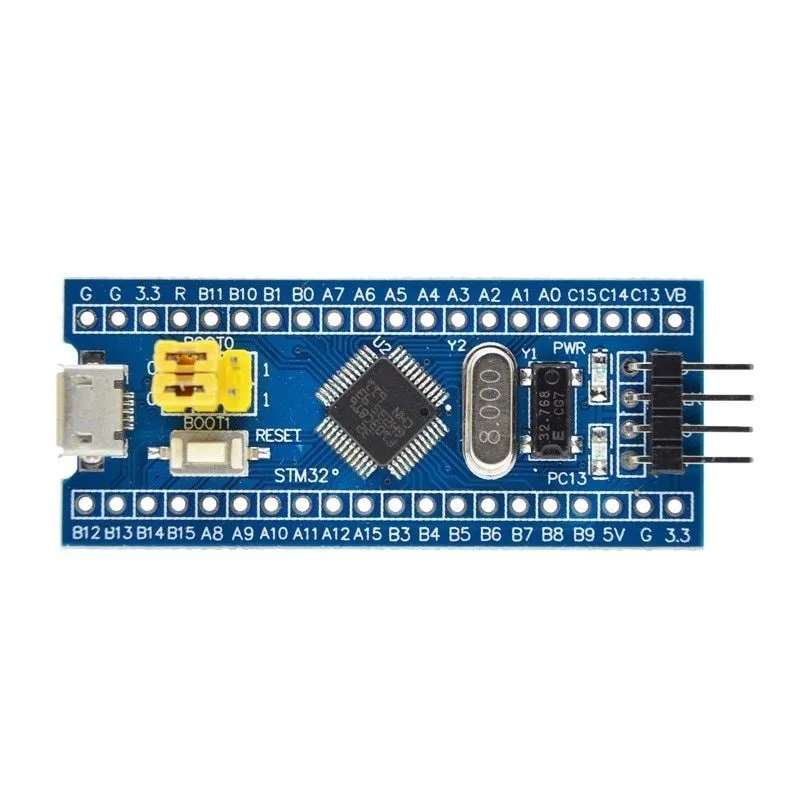
This STM32F103C8T6 minimum system board delivers a fully functional, self-contained development environment centred on the popular ARM Cortex-M3 microcontroller. It is designed for engineers, students, and hobbyists who need to immediately start programming and testing applications without designing a custom PCB for the STM32 chip. The board integrates all essential components, including power regulation, clock generation, and a USB interface, onto a compact 5.3cm by 2.2cm module. Its primary advantage is the significant reduction in initial setup time and complexity, allowing you to focus on software development and hardware interfacing for projects ranging from motor control and sensor networks to user interface prototypes.
Features and Construction
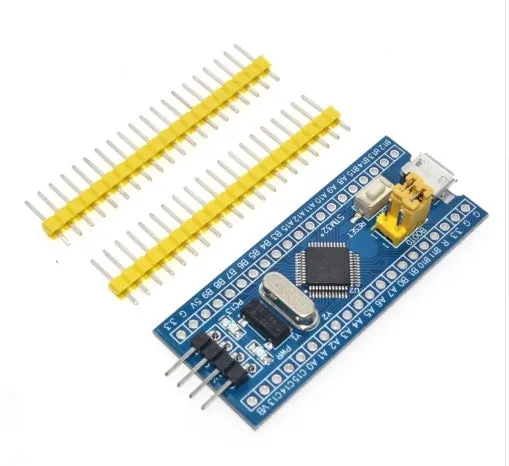
The board is built as a 'minimum system' module, meaning it contains the absolute necessary circuits to make the STM32F103C8T6 microcontroller operational. This includes power management, a clock source, and basic I/O connections, providing a clean slate for adding your own sensors, actuators, and communication modules. The construction is centred on a single-sided or double-sided PCB that hosts all surface-mount and through-hole components in a dense layout to achieve the small overall size.
Material and Build
The core of the board is the STM32F103C8T6 microcontroller in its LQFP48 package, soldered directly onto the PCB. Supporting components include a 4-16MHz crystal oscillator which provides the precise clock signal for the CPU, voltage regulators to deliver the required 2.0-3.6V to the core and I/O, and decoupling capacitors for stable operation. The physical build uses standard FR-4 PCB material with soldermask and silkscreen labelling for pin identification, resulting in a robust platform for bench-top development.
Size and Practical Fit
With dimensions of 5.3cm by 2.2cm, this core board is designed for space-conscious applications. Its rectangular shape and standard 0.1-inch (2.54mm) pitch pin headers along the edges make it straightforward to mount on a solderless breadboard or integrate into a larger custom prototype. The small size does not compromise functionality, as it still provides access to all the microcontroller's I/O pins, power, ground, and the dedicated SWD debug pins through these headers.
Uses and Placement
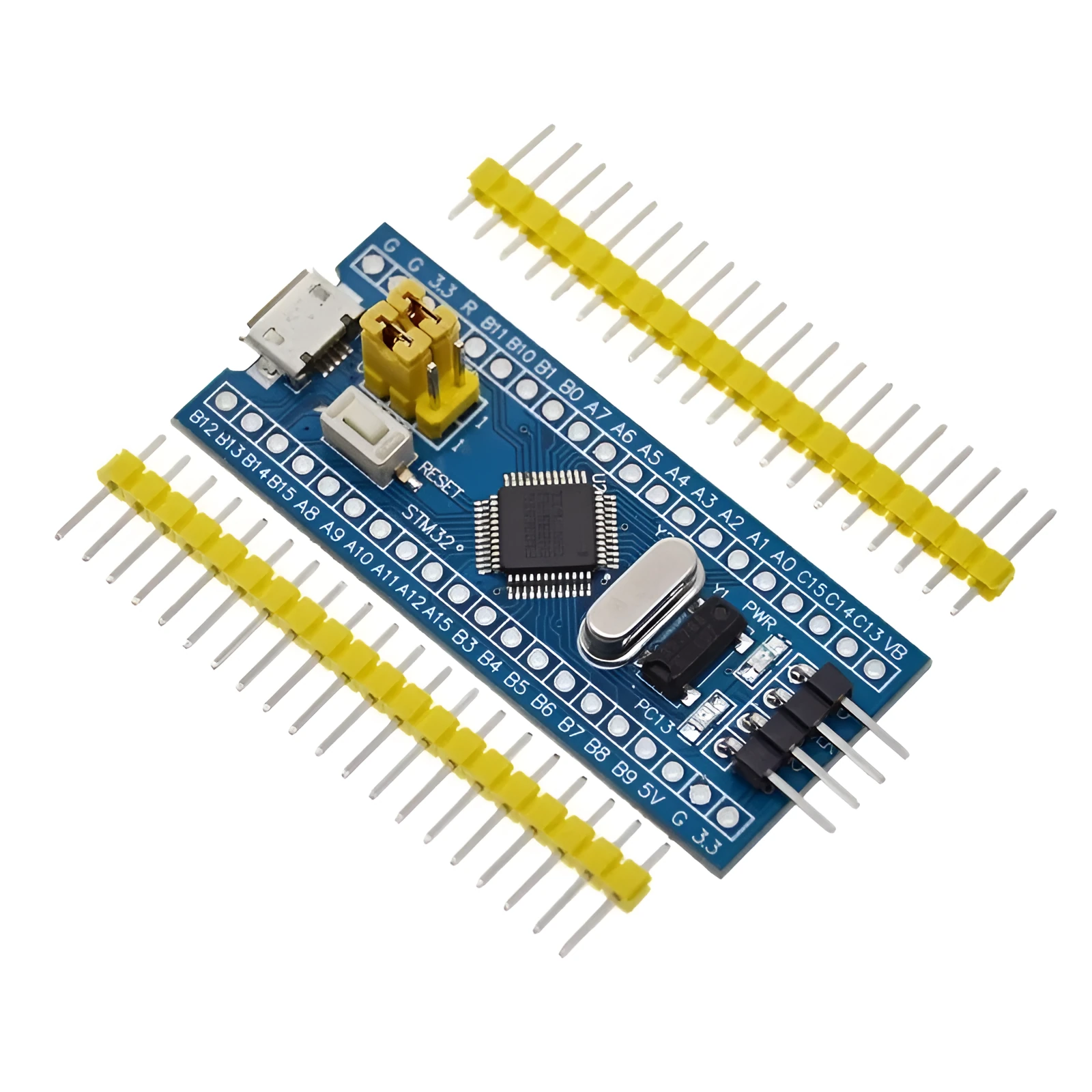
This module serves as a versatile foundation for a wide array of embedded electronics projects. It is particularly useful in scenarios where development time is limited, or where designing a custom PCB for the STM32 is not feasible. The on-board USB port further expands its utility by handling both power and serial data communication, which is a common requirement for many modern devices.
Event or Professional Use
In professional engineering environments or during hackathons and workshops, this board accelerates the prototyping phase. Developers can quickly validate sensor readings, control algorithms, or communication protocols using the pre-assembled hardware. Its compatibility with the ARM Cortex-M3 ecosystem and widespread software support (including STM32CubeIDE and Arduino IDE with specific cores) makes it a reliable choice for proof-of-concept builds and functional testing before committing to a final product design.
Everyday Home Use
For electronics enthusiasts and students, this board lowers the barrier to entry for working with powerful 32-bit microcontrollers. It can be the brain for home automation projects, custom gaming controllers, data loggers, or interactive art installations. The Mini USB connection means it can often be powered and programmed from a standard laptop or USB wall adapter, simplifying the setup on a workbench at home.
Benefits and Buying Value
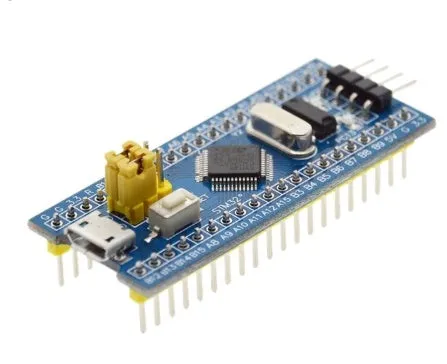
The value of this development board lies in its completeness and convenience. It packages a capable microcontroller with its essential support circuitry into a single, affordable unit that is ready to use straight out of the package. This eliminates the cost and time associated with sourcing individual components and performing the initial SMD soldering required for the STM32 chip itself.
Reuse and Low Maintenance
As a development platform, the board is highly reusable. After completing one project, it can be erased and reprogrammed for a completely different application. The solid-state construction with no moving parts requires virtually no maintenance. If the USB port or headers become damaged through heavy use, they are standard components that can be repaired with basic soldering skills, extending the board's usable life.
Why Choose This Product
Choose this STM32F103C8T6 minimum system board if you need a proven, fully assembled starting point for ARM Cortex-M3 development. Its integrated USB port for power and communication sets it apart from simpler core boards that require separate FTDI modules, offering a more streamlined workflow. The specified 64KB flash and 20KB SRAM provide ample room for complex programs, while the compact size ensures it won't dominate your prototype. It represents a direct, no-fuss path from concept to a working embedded system.