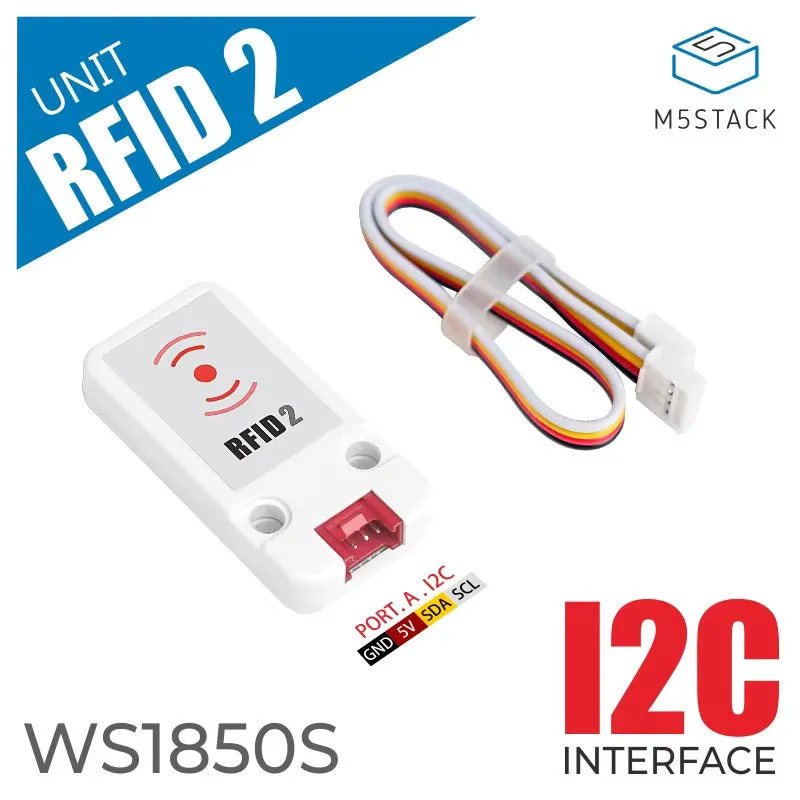
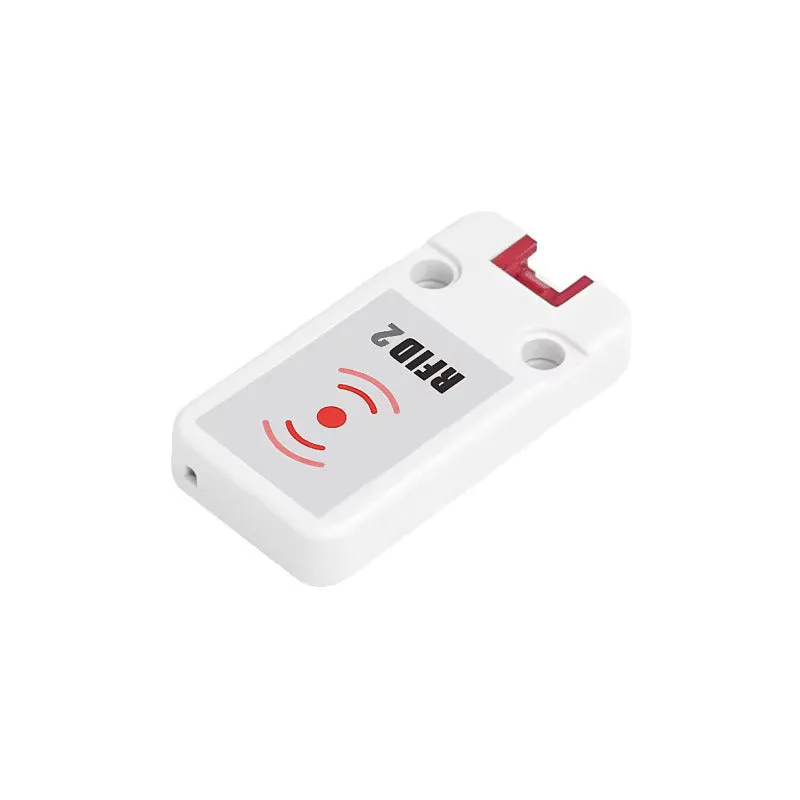
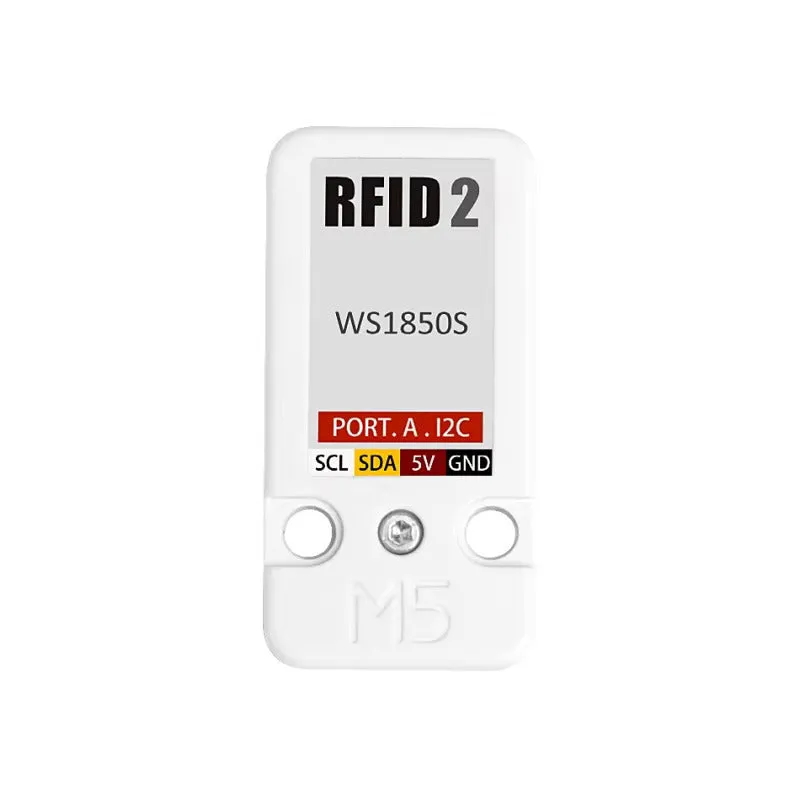
M5Stack RFID 13.56MHz reader sensor module WS1850S for Arduino and UIFlow IOT development projects with 2x Lego compatible holes, 64-byte buffer and fast I2C communication up to 3400 kbit/s


M5Stack RFID 13.56MHz reader sensor module WS1850S for Arduino and UIFlow IOT development projects with 2x Lego compatible holes, 64-byte buffer and fast I2C communication up to 3400 kbit/s
M5Stack WS1850S RFID 13.56MHz Reader Sensor for Arduino and UIFlow IOT Development

This compact RFID sensor module is designed for developers and makers building Internet of Things applications. It provides a ready-to-use 13.56MHz radio frequency identification solution, compatible with popular prototyping platforms. The unit enables projects involving access control, asset tracking, or interactive data points by reading compatible tags. Its inclusion of standard mounting features and a straightforward connection interface aims to reduce integration time, allowing focus on application logic and system design.
\nFeatures and Construction

The WS1850S module is built around core RFID functionality tailored for prototype and small-scale deployment. Its construction prioritises reliable communication and ease of use within a development environment.
\nMaterial and Build
\nThe module's build centres on its electronic components that facilitate RFID communication at the 13.56MHz frequency. It supports standard contactless card protocols including ISO14443A, MIFARE, and NTAG. A key physical feature is the inclusion of two Lego-compatible holes, allowing the unit to be mechanically integrated into structures or enclosures built with compatible bricks, simplifying physical prototyping.
\nSize and Practical Fit
\nThe module's dimensions are specified as 7 by 2 units, indicating a compact form factor suitable for space-constrained projects. This size, combined with the Lego-compatible mounting, offers flexibility in placement within a prototype assembly. The operational reliability is supported by a stated operating temperature range from -20°C to 85°C, accommodating use in various indoor environments.
\nUses and Placement
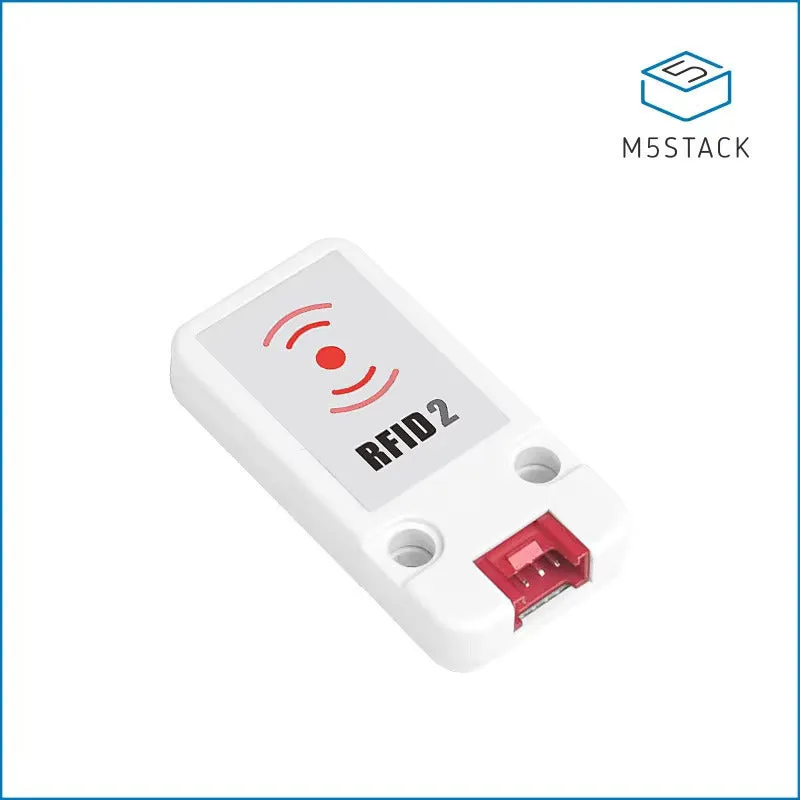
This sensor module is intended for integration into electronic projects where identifying objects or authorising access is required. Its design supports both educational and functional IOT implementations.
\nEvent or Professional Use
\nIn professional or event-based scenarios, the module could be used to create systems for attendee badging, equipment checkout, or interactive exhibits. Its compatibility with the UIFlow platform, supporting both Blockly and Python, allows for relatively quick development of custom interfaces and logic without extensive low-level coding. The fast I2C data rate, up to 3400 kbit/s, helps ensure responsive system performance in these applications.
\nEveryday Home Use
\nFor home IOT enthusiasts, the module enables hobbyist projects such as smart locks for cabinets, pet feeder controllers, or inventory tracking for tools. The 64-byte transceiver buffer provides sufficient space for handling typical command and data exchanges in these applications. The straightforward connection via a HY2.0-4P cable to a compatible M5Stack controller simplifies the wiring process.
\nBenefits and Buying Value

The value of this RFID module lies in its integration of several practical features for developers, reducing the need for sourcing and assembling discrete components.
\nReuse and Low Maintenance
\nThe module is designed as a reusable component within the M5Stack ecosystem. Its specified data storage retention of over 10 years for relevant chip memory contributes to long-term project viability without data loss concerns. The module itself requires minimal maintenance, with care primarily involving standard handling practices for electronic components to avoid electrostatic discharge.
\nWhy Choose This Product
\nThis product combines a specific RFID reading capability with developer-friendly features. The dual compatibility with both Arduino (via library) and the graphical UIFlow platform makes it accessible to users with different coding experience levels. The inclusion of the Lego-compatible mounting holes is a concrete differentiator that addresses a common prototyping challenge: physical mounting. For those developing IOT systems requiring object identification within a short range (under 20mm), this module provides a tested, integrated solution.